

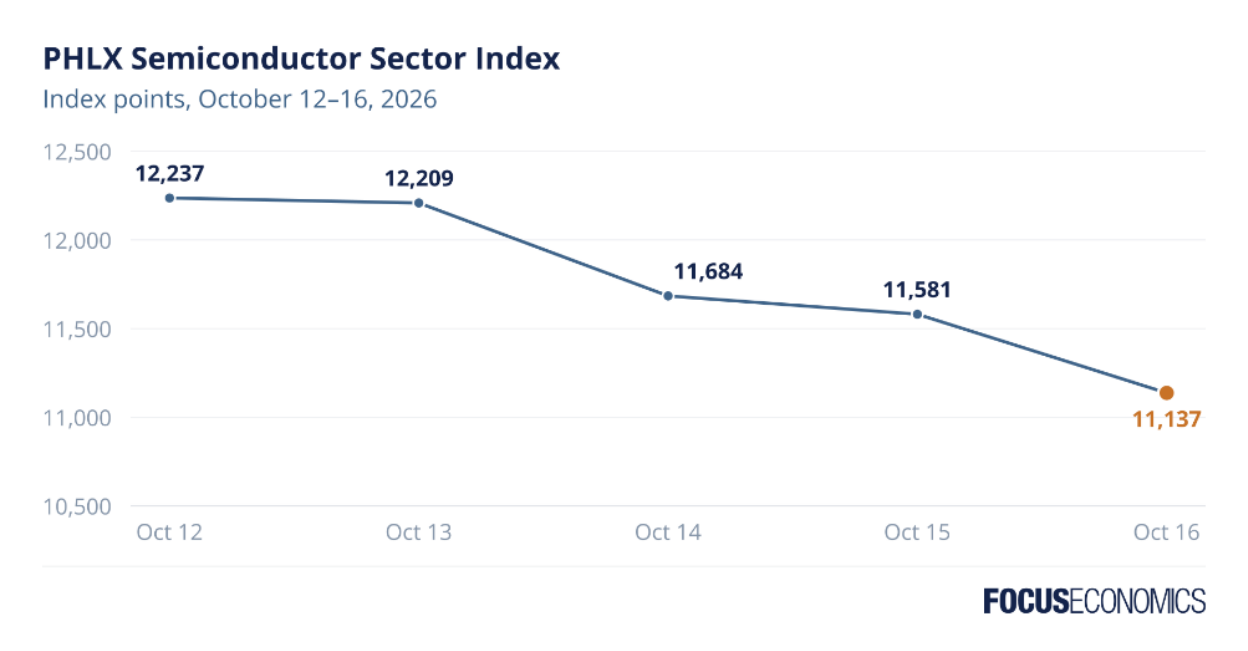
Tech stocks wobble: Over the last week, the U.S. semiconductor index sold off notably, against a backdrop of spiking bond yields, further Fed rate hikes in the mail, and rising public backlash against data centers. Investors grew particularly jittery regarding the outlook for so-called “neo-clouds”. These are relatively young firms—often backed by tech giant Nvidia—engaged in data center construction. CoreWeave, one such firm, has recently been the focal point of market angst, as investors questioned whether its debt-fueled growth strategy would prove sustainable.
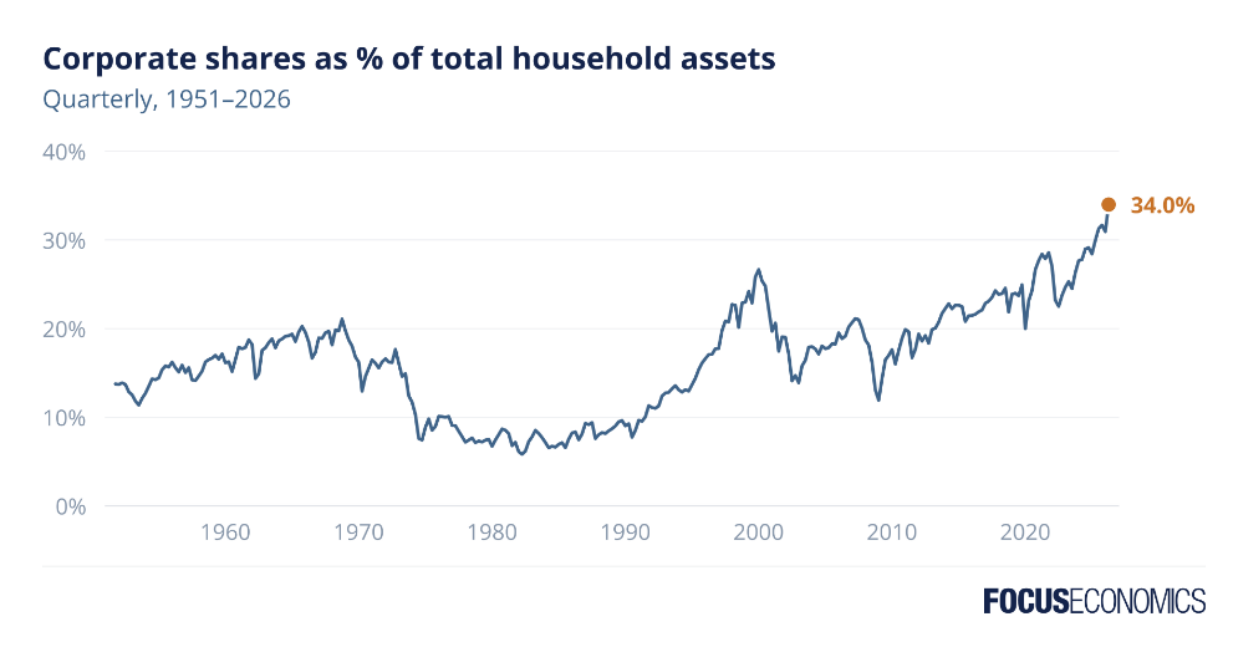
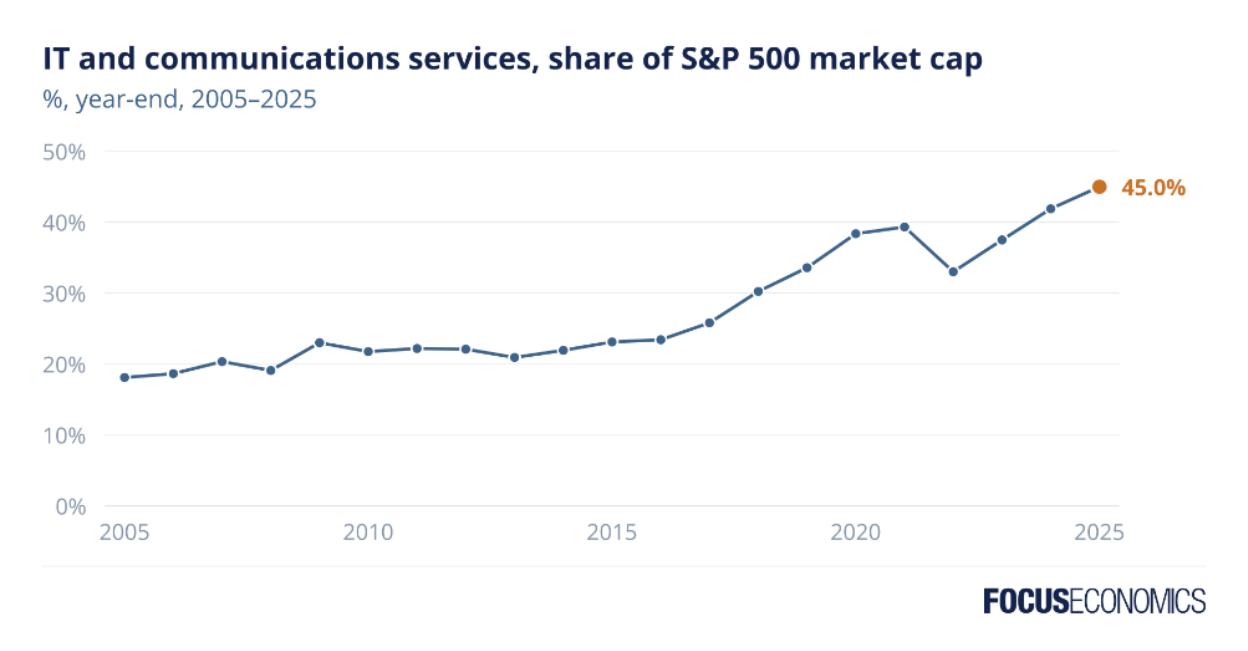
Household wealth has become more stock-heavy: The proportion of U.S. household wealth hinging on the stock market has roughly tripled since its nadir during the 2008–09 financial crisis, with corporate stocks as a percentage of total household assets now at record highs. At the same time, the U.S. stock market has become ever more dominated by technology firms, which now make up approaching half of the S&P 500’s total market capitalization.
Private spending has been a beneficiary: The relentless upward march of the U.S. stock market in recent years has generated positive wealth effects for U.S. consumers, helping underpin notably faster household spending growth compared to other G7 economies.
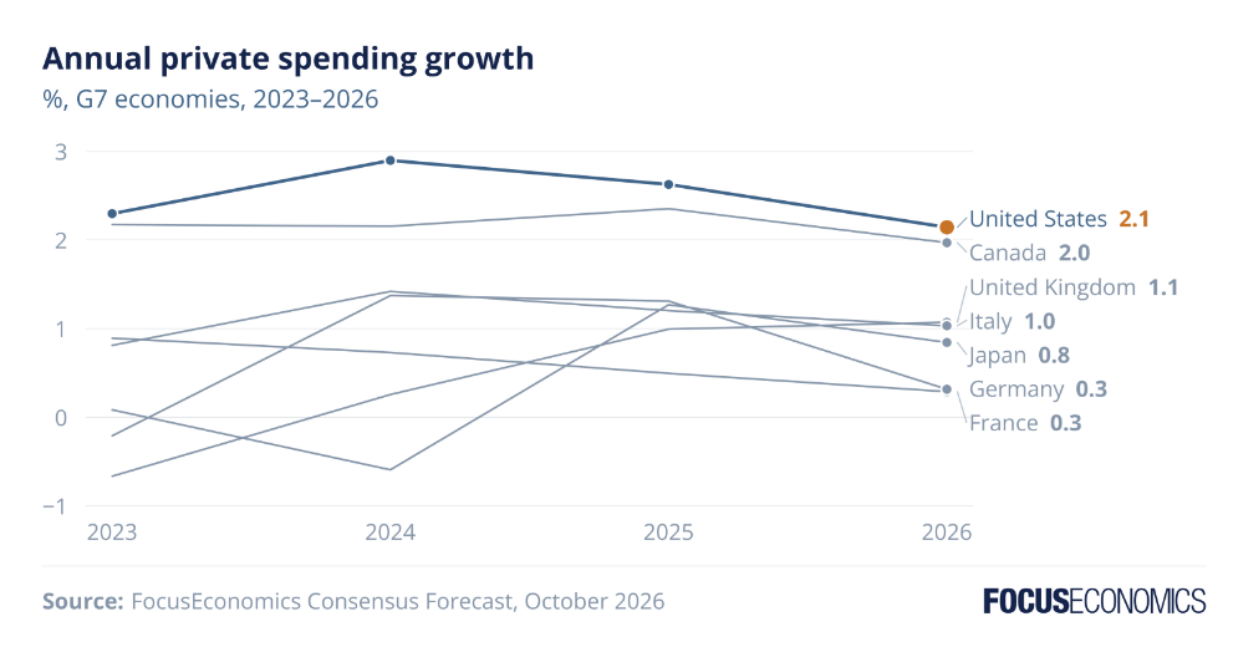
AI bust is a key risk to spending: Our Consensus is for the U.S. to continue to see notably faster private spending growth than in other G7 economies in the future, buttressed by solid productivity growth. However, the drop-off in certain tech shares in recent days highlights a key risk to the outlook: A slowdown in the relentless AI boom causing a sudden, significant decline in the U.S. stock market, hitting household spending and private investment in turn. AI is currently a leading growth driver, but it could also be the economy’s undoing.